Maintenance
Season Readiness: The Pre-Trip Checklist That Keeps You From Breaking Down 200 Miles From Home
By Brad Tomlin · August 19, 2026
Every season change is a stress test for your RV. It sat through winter, or it sat through a long stretch of heat, and every system on it (plumbing, propane, electrical, seals, tires) is about to get asked to work again after weeks or months of doing nothing. Most breakdowns and mid-trip headaches aren't caused by something dramatic. They're caused by something small that nobody checked before pulling out of the driveway.
Here's the system-by-system readiness check worth running before your first trip of the season, or honestly, before any trip after your rig has sat for a while.
Plumbing and water systems
If you winterized, this is where you start. Flush the water lines completely with fresh water before sanitizing the system. Don't skip straight to filling the tank and calling it done. Reconnect the water heater bypass valve (it's easy to forget this step and it causes real confusion when water won't flow where you expect) and run a full flush cycle through the water heater itself. While you're under there, check every visible pipe joint and fitting for drips, and take a look at the refrigerator's water line connection. A slow leak behind the fridge is one of the most common hidden-damage sources because nobody looks back there until something smells wrong.
Propane and heating
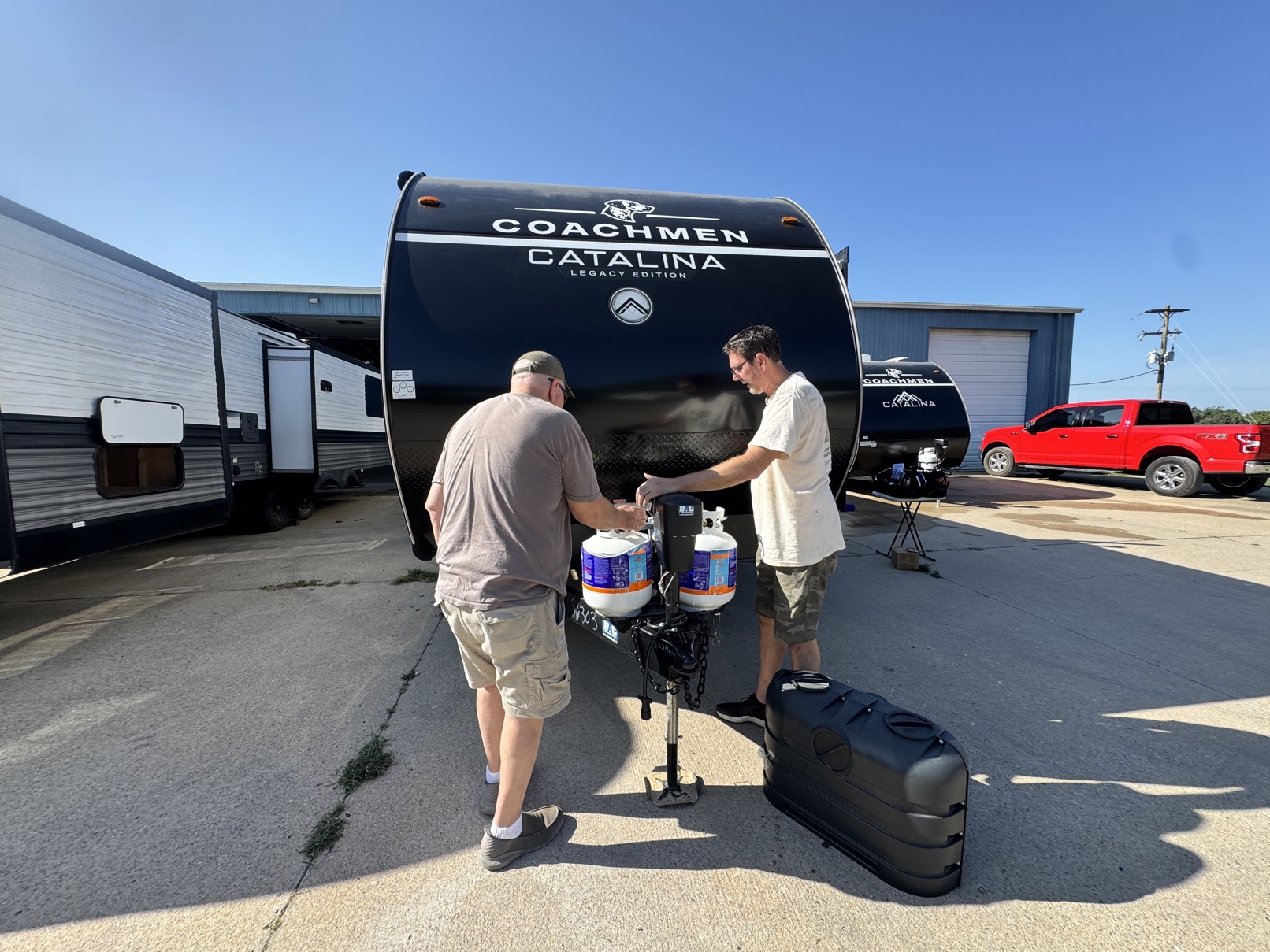
Confirm your LP tank levels before you need them, not after. Check the propane tank compartment for pest nests or chewed lines. Mice and wasps both find RV propane compartments appealing over a long off-season, and it happens more often than owners expect. Then actually run the furnace, not just glance at it. A furnace that "should work fine" and a furnace that ignites and holds a flame are two different things, and the only way to know which one you have is to test it before you're relying on it at 2am in 40-degree weather.
Climate control
Run the air conditioner and confirm it's actually cooling, not just blowing air. Same logic as the furnace: components can seize or fail silently after sitting, and the first hot travel day of the season is the worst time to find out.
Roof, seals, and exterior
This is the step owners skip most often, and it's the one that costs the most when it's ignored. Get up on the roof (or have someone qualified do it) and inspect the vents, AC seal, and any roof penetrations (antennas, satellite mounts, plumbing vents) for cracked or separated sealant. Check window and door gaskets for the same thing. Water intrusion doesn't announce itself; it just quietly works its way into the wall and roof structure until the damage is already significant. A five-minute visual check now is genuinely the cheapest maintenance you'll ever do on an RV.
Tires and undercarriage
Tires that sat all winter need real attention, not just a glance. Check pressure against the actual spec for your rig. Tires lose pressure sitting, and running underinflated is one of the fastest ways to cause a blowout at highway speed. Look closely for cracking or dry rot along the sidewalls, especially if the RV was stored outside or in direct sun. Clean off any accumulated road tar or debris while you're at it, since it can hide the cracking you're trying to spot.
Electrical and safety
Test your smoke detector and carbon monoxide detector batteries. Not "they were probably fine in the fall," actually test them. Give the wiring a visual check anywhere it's exposed, particularly if there's any sign pests have been in the compartments over the off-season.
Interior
Once the systems check out, a quick interior reset (vacuuming, sanitizing the bathroom, checking cabinets and storage for any signs of moisture or pests) rounds things out and means the first trip of the season starts feeling like a trip, not a chore.
When to call in a professional
This checklist covers what any RV owner can reasonably do themselves in under an hour. But if you find something you're not sure about (a soft spot on the roof, a furnace that won't hold ignition, anything electrical that doesn't seem right), that's exactly the point where a second set of trained eyes is worth it. Catching a problem in your driveway is a lot cheaper and a lot less stressful than catching it on the road.
If you're within NW Arkansas and Surrounding Areas and you'd rather have an RVTAA registered technician run the full readiness check and handle anything that needs attention, that's what OZ RVS is here for.
Ready for your season readiness check? Schedule service and let's get your rig road-ready.