Inspection
This Toy Hauler Almost Wasn't Safe to Tow Home
By Brad Tomlin · June 25, 2026
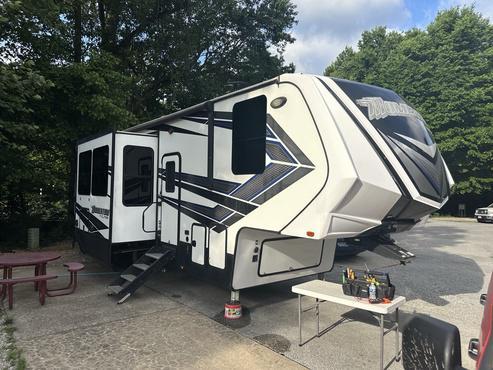
Buying a used toy hauler usually comes with a plan: sign the paperwork, hitch up, and tow it home the same day. That plan assumes the rig is actually ready to be towed. On a recent pre-purchase inspection, it wasn't, not without some attention first.
The tire pressure problem
All four road tires were reading more than 10 psi below the manufacturer's recommended pressure, every single one a life-safety flag on its own, before the rig ever left the driveway. One tire didn't even match the brand of the others, and its cold pressure rating didn't line up with the RV's data plate. Add a tread depth already into the yellow warning zone on one wheel, and a spare tire more than six years past its DOT date, and towing this unit any real distance was a genuinely bad idea until every one of those got addressed.
Lights that have to work before you tow
A pre-purchase inspection checks the chassis lighting for a reason: both front and rear clearance lights failed to activate. That's not a "get to it eventually" repair. Those lights are what keeps other drivers aware of a wide trailer changing lanes or stopping in front of them. None of it is visible from inside the tow vehicle until someone's specifically testing each one.
Smoke detectors that weren't actually protecting anyone
Every RV needs a working smoke detector, and this one had three units in play, none of them doing their job. One was found lying loose on the bathroom counter. The bedroom's mounting point was empty. A third was sitting inside a garage storage cabinet. All three were also past their 4-year replacement date. On paper, "smoke detector installed" might have been true at some point. In practice, there wasn't a single one actually protecting the people sleeping inside.
The rest of the list
Beyond the safety items, the inspection turned up a handful of things worth negotiating before closing: bent condenser fins on the air conditioner, sidewall damage taped over rather than repaired, fading and cracking decals, a slideout trim panel separating from its wall, a broken plastic fender, a water heater that wouldn't ignite on propane, an oven pilot that wouldn't stay lit, a washer that wouldn't power on, an electric fireplace remote that stopped working, and a house battery reading essentially dead at 9.98 volts with no usable charge left.
Why this matters
None of these issues are visible from the driver's seat of a tow vehicle, and most aren't visible on a quick lot walkthrough either. A pre-purchase inspection exists specifically to catch the difference between "looks ready to tow" and "actually is." Every inspection we perform follows NRVIA's Code of Ethics and Standards of Practice: a documented report you can hand to a seller and negotiate from, instead of a guess.
About to buy a toy hauler you're planning to tow home the same day? Book an inspection first, and know it's actually ready for the road.